

Sidewalk Accessibility Assessment with Daxbots
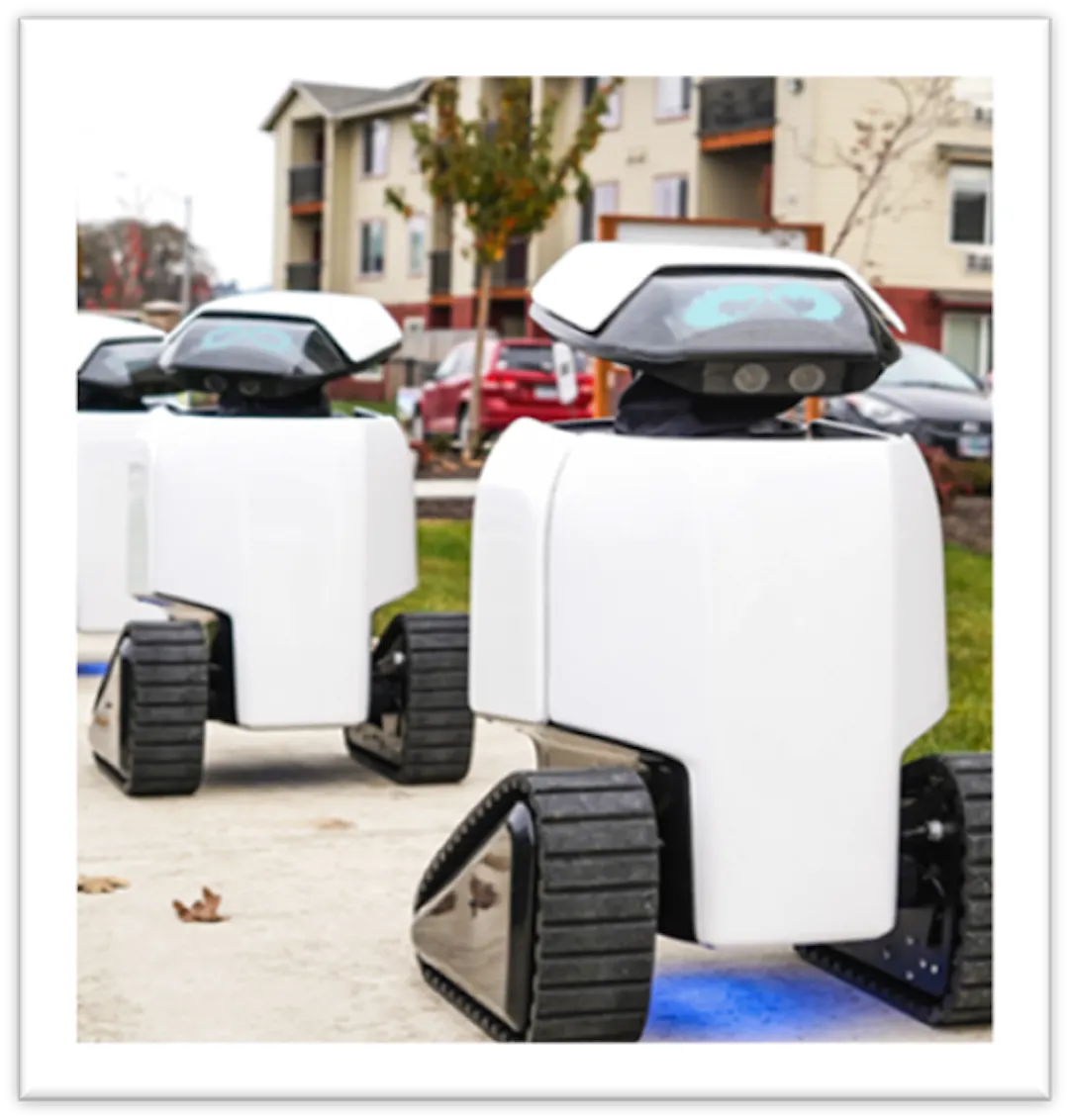
Small robots will help collect sidewalk accessibility information across Tyler
This summer, a new kind of City project rolled into Tyler, one sidewalk at a time. We worked with Kimley-Horn and Daxbot to collect accessibility information for pedestrian facilities in public rights-of-way and trails across the City. This work supports the City’s ADA Self-Evaluation and Transition Plan project.
The robots are designed for shared public environments. Data collection was limited to information related to pedestrian infrastructure, and the robots do not store personal information.
The robots move at walking speed along pedestrian pathways while collecting information on sidewalks and trails, curb ramps, signalized intersections, and transit stops. Using this technology also helps reduce the need for staff to gather the same information in or near traffic.
What this project included
Using robotic field-collection technology, the project team documented the existing conditions of pedestrian facilities to identify access barriers in the public right-of-way. This approach will produce a more detailed, consistent record of pedestrian infrastructure conditions and is expected to reduce time and costs compared with traditional methods.
Field collection was performed on approximately 94.5 miles of sidewalks and trails and associated curb ramps, 122 signalized intersections, and 59 transit stops.
Why robots were used
The robots move at walking speed along pedestrian pathways while collecting information on sidewalks and trails, curb ramps, signalized intersections, and transit stops. Using this technology helps gather consistent data across a large area.
How this fits into the larger ADA plan
This sidewalk assessment is one part of the City of Tyler’s ADA Self-Evaluation and Transition Plan. The broader effort reviews City-owned or City-managed facilities, programs, and public spaces to help identify barriers to access and support future improvements.
The full ADA evaluation includes sidewalks, trails, intersections, transit stops, parks, buildings, parking lots, and other public spaces under City responsibility. This work also helps support the City’s eligibility for grant opportunities tied to accessibility improvements.
This assessment will give the City a clearer, more comprehensive picture of conditions across Tyler’s pedestrian network. The information collected will help inform future planning and prioritization for accessibility improvements across public spaces that fall under City responsibility.
The City already invests $500,000 annually in Half Cent Sales Tax funds for pedestrian and sidewalk improvements. The ADA Self-Evaluation and Transition Plan will work alongside those investments, helping prioritize the projects that will make the biggest difference for Tyler families and visitors.
About Daxbot
Daxbot builds “good” robots for work in urban spaces. Its robots are designed to prioritize human safety, comfort, and privacy, helping cities, businesses, and project teams carry out fieldwork and other tasks more efficiently while keeping people at the center of the experience.
Have a question about this project? Ask below!
Ask a Question
-
City ADA Coordinator

-

-

-

Thank you for your contribution!
Help us reach out to more people in the community
Share this with family and friends